


Business Empire: RichMan
3.810.75K Reviews
App Specs
- Version
- 1.25.22
- Updated On
- License
- Free
- Downloads
- 10,000,000+
- Developer
- AAA Fun
- Categories
- Simulation
- Platform
- Android, iOS
Screenshots
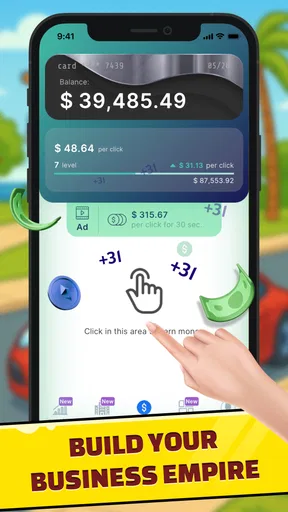

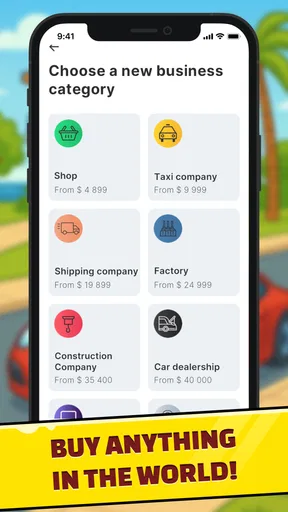



 Analysis by AppCompare
I look at a tycoon game differently when I’m deciding whether it can fit into an ordinary day. Can I follow what is happening without squinting at a wall of tiny information? Can I make progress in a short break, or does it demand my full attention? Business Empire: RichMan is a free simulation game from AAA Fun about building wealth through business deals. Its premise is easy to grasp, but how comfortable it feels depends on what kind of play session—and what kind of screen—you prefer.
Who is likely to enjoy this particular business loop?
I’d put this game on the shortlist for someone who enjoys imagining how money can be put to work, but doesn’t want a city-planning project or a character-driven story. It offers a business-minded alternative to familiar farm and town simulators: the appeal is following opportunities and thinking about growth, rather than tending a setting for its own sake. If that kind of financial framing sounds satisfying, it gives you a focused theme to explore.
It is less suited to a player who wants every session to deliver a dramatic event or a carefully written narrative. I would also be cautious about recommending it to someone who dislikes comparing options on a phone. The central pleasure depends on paying attention to the business choices, so a player who wants a game to run entirely in the background may be happier with a more hands-off idle title.
Getting oriented in a business simulator
The appeal is the familiar tycoon fantasy: make decisions, pursue profitable opportunities, and try to grow from a small starting point into a more successful business player. I find that kind of loop satisfying when each choice feels like a step toward a bigger goal. The game’s business focus also gives it a different flavor from simulations centered on running a town, caring for characters, or managing a detailed production chain.
That distinction matters if you are choosing between games in the genre. A traditional management sim often asks you to balance several connected systems at once. Business Empire is framed around wealth and deals, so it is more appealing if you want to think like an investor than if you want to design a city or micromanage a workforce. It suits players who enjoy watching decisions accumulate into a larger financial picture.
The game has a 3.8 average from around 172,000 ratings, with about 11,000 written reviews. It has passed 10 million installs, so it is a well-established mobile title rather than an obscure experiment. Those figures suggest plenty of people have tried it, but they are not a substitute for deciding whether its pace and presentation work for you.
AAA Fun released it on December 28, 2021, and version 1.25.22 is the current version. It is rated Everyone and runs on Android 7.1 or later. The game is free to download, with optional in-app purchases priced from $0.99 to $9.99 per item. That makes it easy to try, though I would treat spending as optional rather than part of the basic promise.
Worth Reading Before You Choose

Flipboard Shows What News Apps Must Do Beyond the Feed

Switching to Android Auto Means Rethinking Your Driving Routine

Google Calendar Makes a Crowded Week Easier to Manage

Ludo King Makes the Most of the Minutes Between Plans

Baby Panda World Brings Quick Play to Modern Phones, but Its Game Library Feels Busy

ESPN’s Live Game View Makes Following Close Games Easier
Following the choices without losing the thread
For a business game, readability is not just about font size. It is also about understanding what a choice is meant to do and being able to compare one opportunity with another. If you play by checking in briefly, the most useful habit is to pause before making a purchase or deal and read the surrounding information rather than tapping through on instinct. That small bit of patience helps keep the game’s financial theme meaningful instead of turning it into a blur of buttons.
I would especially recommend a first session in a quiet moment. Give yourself time to learn the game’s vocabulary and notice how its choices are presented. Once you recognize the recurring patterns, short visits are easier to manage: you can focus on the decision in front of you instead of repeatedly trying to work out where you are. This is a practical approach for any tycoon game, but it matters here because the pleasure comes from making sense of business choices.
There is a trade-off between a compact mobile interface and a comfortable reading experience. A phone is convenient, but its screen can make detailed information harder to scan than it would be on a larger display. If you find yourself rushing through text or overlooking distinctions, slow down and use a larger device if one is available and compatible. I would not choose this game for a session where I need every decision to be instantly legible at a glance.
Hands, attention, and sensory comfort
Business simulations are usually less dependent on fast reactions than action games, and that is a genuine advantage for players who prefer deliberate decisions to precise timing. Here, I would approach the game as something to play at my own pace: read, consider, then act. That can make it a better fit than a reflex-heavy title during a tired evening or when I have only one hand free, provided the current screen remains comfortable to operate.
Still, a slower genre does not automatically make a game effortless for every motor ability. Repeated taps, small controls, or long stretches of holding a phone can become tiring, and those details matter more to some players than to others. I suggest trying a short session before committing to a long one. Notice whether your hand can reach the controls comfortably and whether you can make choices without accidentally hitting a neighboring option.
Sensory comfort is personal, too. A player who enjoys a steady stream of visual decisions may find the business theme engaging, while someone who wants a quiet, spacious presentation may prefer a less information-focused simulation. If screen glare or visual crowding is an issue, adjusting the room lighting and enlarging the device display where possible are sensible first steps. I would not assume the game has specialized accessibility settings; the useful test is whether its actual presentation feels manageable on your device.
One non-obvious way to make the experience less demanding is to separate learning from optimization. On a first visit, explore what the game asks you to do without trying to make every decision perfect. On a later visit, compare choices more carefully. That reduces the pressure to absorb everything at once and gives players who need more processing time a fairer introduction to the business loop.
Where it fits into a real day
I can picture opening it during a lunch break, making a couple of considered decisions, then putting the phone away before returning to work. The business premise gives a session a clear purpose: I am checking on progress and deciding what opportunity makes sense next, not simply filling time with an unrelated mini-game. For that use, I would avoid starting when I have only a few seconds; even a relaxed simulator is more enjoyable when I can read before acting.
It can also suit a quiet commute as long as the journey is stable enough to look at the screen. On a crowded bus, a small display, interruptions, and movement can make it harder to compare choices. In that setting, a podcast or a game designed for quick, low-attention interactions may be a better companion. Business Empire is most comfortable when I can give it a little focused attention, even if the session itself is short.
For a practical routine, I’d treat each visit as a small decision window rather than opening the game every time I have a spare moment. For example, after lunch I might check in when I can sit down, review the next opportunity, and stop once I’ve made a considered choice. If a coworker interrupts or a stop is coming up on the commute, I’d wait instead of trying to finish while distracted. That approach is useful for players who need extra time to read or switch attention between tasks, and it helps avoid turning a relaxing simulator into another source of pressure.
For younger players, the Everyone rating makes the intended age range broad, but I would still consider the child’s reading ability and comfort with optional purchases. The game is free, yet individual in-app items cost between $0.99 and $9.99. If a child is playing, I would discuss purchases beforehand and use the device’s existing purchase controls. That is a more useful precaution than assuming a free download means there can be no spending decisions.
Another practical choice is to treat the game as a gradual hobby rather than a task list. If you check in while distracted and make choices without reading, the tycoon theme loses much of its appeal. If you prefer a game that rewards a few thoughtful decisions whenever you have a break, it is easier to fit into daily life. The key question is not whether you have hours to spare, but whether you enjoy giving a small amount of attention to business-style choices.
Trade-offs, purchases, and who may prefer another game
The free entry point is welcome, but optional purchases can change how a player thinks about progress. My advice is to begin without spending and see whether the ordinary pace is enjoyable. If the game feels satisfying at that pace, there is little reason to buy anything just because an option is visible. If you feel pressured to pay in order to enjoy the basic loop, that is a sign to step back rather than treating a purchase as compulsory.
Compared with management games built around intricate logistics, this title’s business-and-wealth framing is a more direct fit for someone who likes deals and financial growth. Compared with very casual idle games, it asks for more interest in the decisions themselves. That middle ground can be appealing, but it also narrows the audience: players wanting deep city planning may find it too focused, while players seeking something they can ignore almost entirely may find it too involved.
When weighing it against another mobile simulation, I’d ask what I want to do with my attention. A city builder is the better choice if I want to shape a visible place and coordinate interconnected systems; a relaxed idle game is better if I want occasional check-ins with little decision-making. This one sits between those options, with its appeal tied to business choices. That makes the comparison less about which genre is objectively better and more about whether thinking through financial opportunities sounds like a pleasant use of a break.
I would skip it if I wanted a highly tactile building game, a story-led experience, or a simulator whose main pleasure is decorating a space. I would also look elsewhere if detailed on-screen information is uncomfortable and trying it on a larger screen does not help. The fact that a game is rated Everyone does not guarantee that its interface will suit every vision, dexterity, attention, or sensory need.
For a fair trial, I would use the first few visits to answer three questions: Can I read the choices comfortably? Do I understand why one decision appeals more than another? Does the pace feel satisfying without buying anything? Those checks are more revealing than installing it and tapping quickly through the opening. They also help distinguish a personal interface mismatch from a broader dislike of business simulations.
If you are unsure whether the phone presentation will work for you, there is no need to decide based on the premise alone. Try a brief session in the place where you are most likely to play, and notice whether you can read and operate the choices without strain. If you can follow the decisions but simply prefer a different kind of simulation, that is a matter of taste; if the screen or controls are uncomfortable, another game is a more sensible choice. Keeping those two questions separate makes the trial more useful.
A thoughtful fit, with a few limits
Business Empire: RichMan is worth trying if you like mobile tycoon games centered on business decisions and can enjoy progress at a measured pace. I like that its premise gives short sessions a clear direction, and the free download makes it easy to see whether the style suits you. Its strongest audience is someone who wants to think about making money and expanding opportunities, not someone looking for a sprawling world to build or a game that requires no attention.
Its inclusive potential is best understood as situational rather than automatic: a slower simulation can be easier to approach than a reflex test, but screen comfort, control reach, reading demands, and interruptions still shape the experience. I would test it in a calm setting, take time with the early choices, and keep purchases firmly optional. If those conditions work for you, it can be an engaging little business exercise; if they do not, a simpler idle title or a more visually spacious management game is likely a better choice.
My overall recommendation is a cautious yes for players curious about financial-growth simulations. The game has a clear identity, a large audience, and a low-friction way to get started, but it is not a universal fit just because its age rating is broad. Try a short session on the device you actually plan to use, pay attention to how comfortably you can follow the decisions, and let that experience—not the promise of becoming a tycoon—decide whether to keep playing.
Pros
- Offers several business types
- from shops to banks and factories.
- Includes real estate and stock-market systems for varied investment strategies.
- Allows progress through idle earnings while you are away.
- Clear menus make it easy to track businesses
- assets
- and income.
- Suitable for short check-ins as well as longer play sessions.
Cons
- Progress can become slow without frequent upgrades or active play.
- Many upgrades rely on repeated tapping and similar management tasks.
- Ads and optional purchases may affect the pace of progression.
- The stock market can feel unpredictable and offers limited guidance.
- Some business systems may take time to unlock and fully understand.
FAQs for Business Empire: RichMan
What is Business Empire: RichMan?
Business Empire: RichMan is a business simulation game in which you build a virtual fortune by running and investing in a range of enterprises. You can start with small ventures, expand into larger businesses, and pursue other opportunities as your in-game wealth grows. Its main appeal is the steady progression from modest beginnings toward a broader business portfolio, rather than a story-driven campaign.
Is Business Empire: RichMan free to play?
The game is generally available as a free download, but its store listing and in-app purchase options may vary by platform or region. As with many free mobile games, you may encounter advertisements or optional purchases, and these can affect how quickly you progress. Check the current Google Play or App Store listing for the latest pricing, purchase details, and any platform-specific conditions before installing.
Can I play Business Empire: RichMan offline?
Offline access can depend on the game version and the features you want to use. Some business-management activities may remain available without a connection, while advertisements, purchases, cloud saves, or other online services may require internet access. If you plan to play while travelling or away from Wi-Fi, check the app’s current store description and test its offline behavior before relying on it.
Does Business Empire: RichMan have multiplayer or require an account?
Business Empire: RichMan is primarily presented as a solo simulation focused on growing your own in-game businesses, rather than competing in a conventional multiplayer match. Account requirements and save options can change between releases and devices, so review the permissions and account information shown during setup. If preserving progress matters, check whether the current version supports cloud saving and how progress transfers between devices.
Is Business Empire: RichMan suitable for children, and what should I check before downloading?
The game centers on simulated business decisions and virtual money, but its age rating, advertising, and in-app purchase settings should still be checked before a child downloads it. Ratings and policies can differ between Google Play and the App Store, and may change over time. Review the listing for your region, discuss purchase controls with younger players, and use parental controls where appropriate.


